
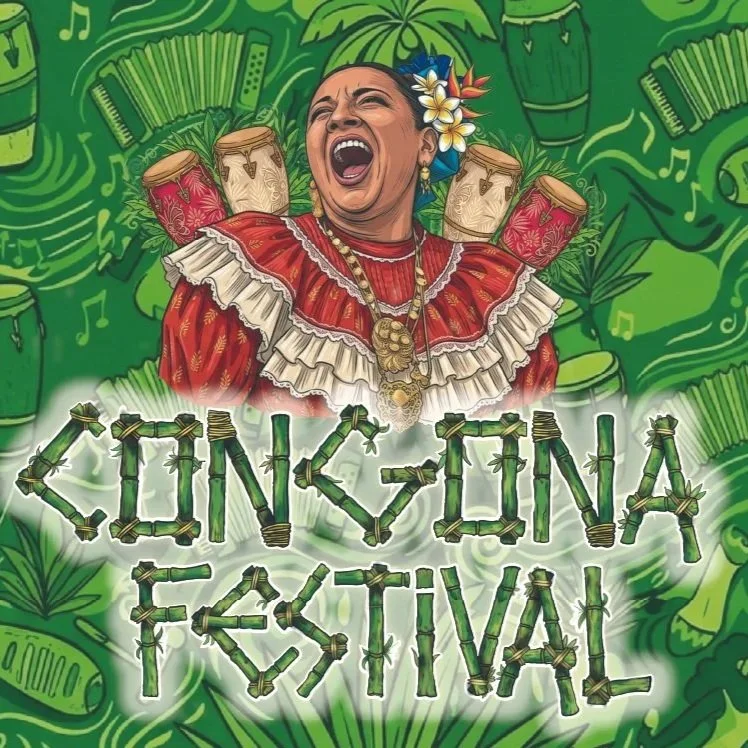
CONGONA FESTIVAL IN MALMÖ!
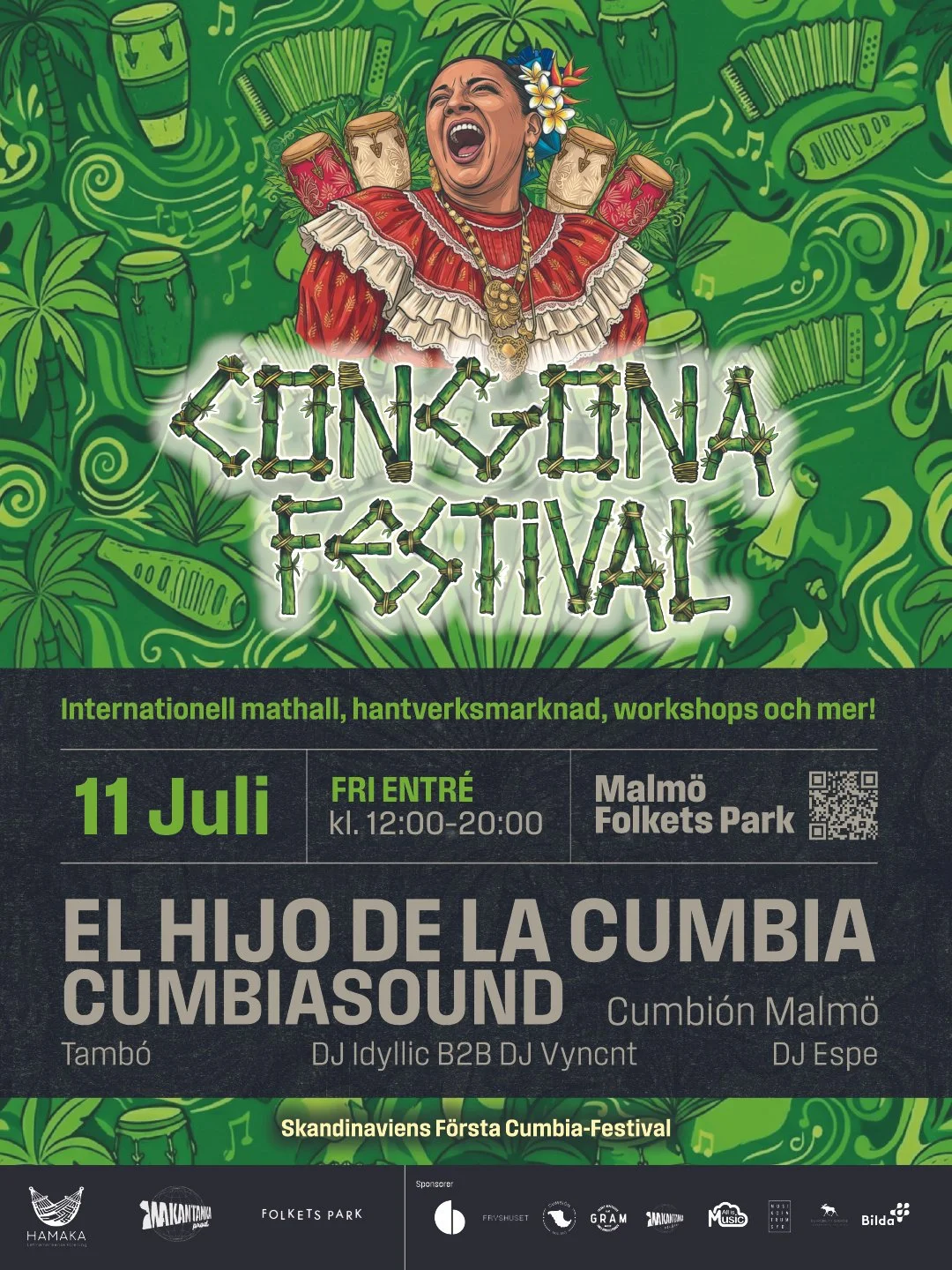
Congona Festival arrives in Malmö on July 11th as the very first festival exclusively dedicated to cumbia in all of Scandinavia. Organized by Wakan Tanka Records and Hamaka Latinamerikansk Förening, this free event will feature live bands, DJs, dance performances and a variety of local food and crafts vendors.
Tell us the story behind the Congona Festival? Why did you decide to organize this event?
I am part of Wakan Tanka Prod, an agency and production company that started as a record label in 2013, founded by Emiliano Gomez. Our purpose has always been to provide a space for artists working with cumbia and other world music fusions.
Since the 2010s, cumbia has been gaining more and more presence on the international music scene, and we noticed that while there are some great events in Scandinavia, there is no festival fully focused on this genre. We want to start a tradition here and provide a new space for cumbia artists to showcase their work.
What is the meaning of the name of Congona?
The name evokes the origins of modern cumbia in Colombia. There is a very famous cumbia song called 'La Pava Congona' by Andrés Landero, a musician and composer who is widely considered 'The King of Cumbia' for adapting the traditional melodies and harmonies of the indigenous gaitas to the accordion. This specific style spread across the entire American continent and laid the groundwork for the cumbia we listen to nowadays.
Emiliano and I brainstormed many different name options, but in the end, 'Congona' just felt right. It allows us to pay homage to Landero’s legacy, and we also love the rhythm and sound of the word itself, it kind of evokes dance, energy, the tropical and fun.
Why cumbia? How did this music genre become important for you?
My origins have nothing to do with cumbia. I am Bulgarian, raised in Portugal, and the first time I ever heard cumbia was when I was living in Madrid back in 2009. By pure accident, I ended up at a concert by the Mexican band that fused different traditional Mexican rhythms, including cumbia. I actually remember the exact moment that I heard the rhythm of cumbia for the first time and I wondered how to find more of it.
A few years later, I moved to Mexico, where I knew cumbia was huge. However, I was shocked to find that some people would laugh and dismiss it as 'low class' music, even though everyone ended up dancing to it in the late hours of any party.
At the time, I ran a blog, so I started interviewing cumbia artists to understand the genre. Today, I’m glad to see that cumbia is gaining respect worldwide, largely thanks to the work of both underground and mainstream artists who are expanding this rhythm internationally.
What impact does this event have on the Malmö local scene?
I believe that Malmö, and specifically Folkets Park, is a great scenery for a cumbia festival. Malmö is one of the most diverse and multicultural cities in Scandinavia, so it makes total sense to create an event that aims to involve not only the Spanish-speaking community, but the entirety of Malmö’s society and its visitors.
What can people expect to experience on July 11th?
We are aiming to offer a full cultural experience. The festival will kick off at 12:00 with family-friendly activities designed to give those new to the genre a deeper insight into cumbia music and dance. Visitors can also enjoy an international food market and a craft market.
Regarding the musical program, we will take the audience on a journey from the origins of cumbia to modern fusions with electronic music and other genres. I wanted to make the lineup as inclusive as possible, featuring artists of different generations, genders, and nationalities.
This year’s program includes El Cumbión, a dance troupe from Colombia; Cumbiasound, a cumbia project created right here by a Malmö local; and our main act, El Hijo de la Cumbia from Argentina, a pioneer project of electronic cumbia. We will also feature a special collaboration with DJs from Fryshuset, among other surprises.
What is the biggest challenge of creating a niche festival from scratch, and what keeps you going?
This year has been a big learning process. I have organized events in the past, but this is the very first festival I’ve put together from scratch.
One of the biggest challenges in a first edition is finding people to support and help you execute the vision. In that sense, I was incredibly lucky to get the support of Hamaka Latinamerikansk Förening, who believed in the project from the very first moment and agreed to co-organize it side by side. They are doing a fantastic job managing the community activities and the market areas, which gives me the breathing room to fully focus on the artistic direction.
I also feel that Malmö’s multiculturality makes it much easier to connect with people who want to get involved and that has been very important.